Showing posts with label education. Show all posts

Wednesday, 4 November 2015

"Every Child Wild": The Wildlife Trusts' Campaign to Reconnect Children with Nature

When I was volunteering in the visitor centre of RSPB Pulborough Brooks recently, two young girls came bursting through the door with pink cheeks, big grins and a bug pot clutched tightly in their hands. They rushed up to me and held the pots up saying "Look what we found!" Their enthusiasm was infectious and had me grinning away with them. I peered inside each pot to see a red beetle and a small spider but, since my insect/arachnid fact pool is pretty sparse, I couldn't tell them specifically what they had caught. Despite this, the girls remained giddy with excitement, showing me what they had ticked off on their spotting sheets while they had been on the reserve. They both went home with stickers, still laughing and talking animatedly about what they had seen. I was left glowing in the knowledge that there were two more children who got close to nature, learnt something and took away a wonderful experience.
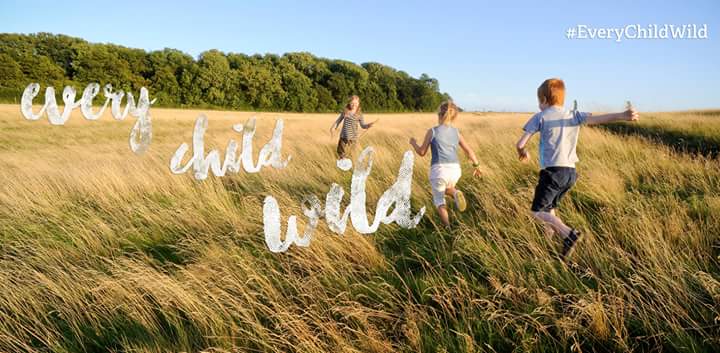
Connecting children with the natural world is one of the challenges of our modern, technologically-advanced world and it's one that is close to my heart. It's also very close to the heart of The Wildlife Trusts who today launched their new campaign "Every Child Wild". Their goal is all in the name: to get every single child in touch with nature in some way. On the campaign page of their website (visit this link: www.wildlifetrusts.org/EveryChildWild) they say:

"Children are happier, healthier and more creative when they are connected with natural world. This should be an option not just for a few, but for every child in the UK."

It seems like an obvious concept but, unfortunately, it would appear that there is a severe lack of "wild play" in the lives of children nowadays. As we all know, there is a lot of focus around smart devices and many kids spend most of their time staring at a screen of time kind, both at home and at school where tablets are being introduced more and more as a learning tool. Of course, there are plenty of benefits to using these devices for learning but too much screen time is preventing children from getting fresh air, exercise and from experiencing the wildlife on their doorsteps.

The Wildlife Trusts commissioned a report this year to find out exactly where children and nature stand together and they came back with some worrying statistics. They said that 27% of 8-15 year olds had "never played outside by themselves, beyond their house or garden" and of those children, 37% had not played outside in the past 6 months. When I think back to when I was that age, I have clear memories of spending the warmer evenings playing games on the local green with the neigbouring kids, having water balloon fights and constructing unfeasibly long daisy chains. In fact, the memories that have stuck in my head are the ones I spent outside. 

Naturally, parents face a number of worries over letting their children play outside, busy roads and stranger danger being two of the biggest. Green spaces are much less abundant now, with so much housing development going on, and for those children living in more urban areas, finding an outdoor place to play is even trickier. That's why a campaign like "Every Child Wild" is so vital. It's working hard to get round the challenges of modern Britain and find new and exciting ways for kids to involve themselves with wild activities. 
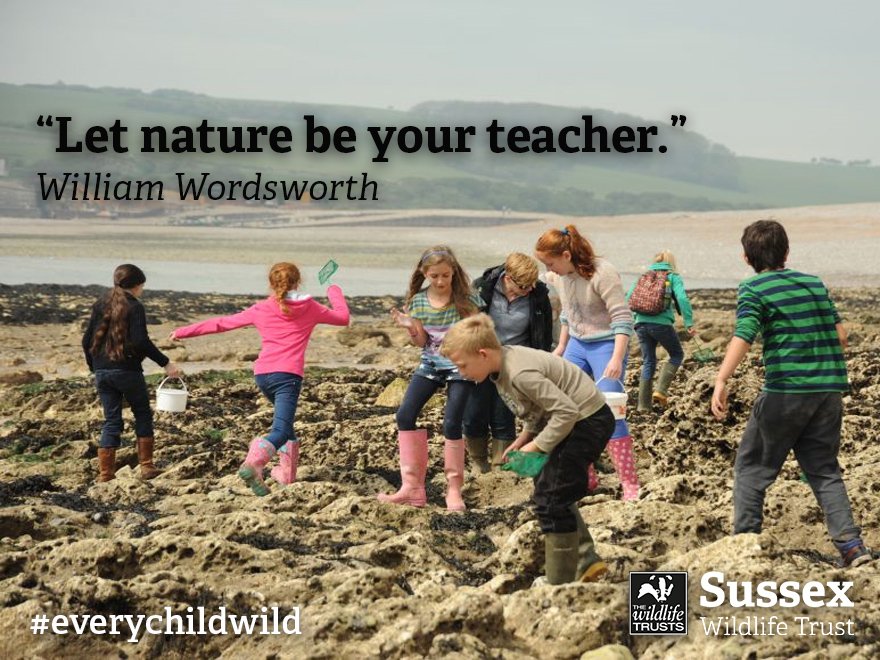
A big part of this campaign is targeted at schools. Children generally spend five out of seven days of the week at school, so a large percentage of interaction with nature has to be undertaken there. The Wildlife Trusts are already reaching 300,000 school children each year but there are 500,000 still to be reached. In the Trusts' report, they found "only 24% of children said their school had an indoor nature display area like a nature table" and just half of children said they have a nature area outdoors. More of an emphasis needs to be put on nature at schools, so that they can develop a proper respect for the environment and discover new and exciting facts about wildlife; this is where the conservationists of tomorrow will be inspired.

The importance of encouraging children to get outside cannot be stressed enough. There are so many benefits to connecting with nature, not only for young people but for all ages; both physical and mental health can be vastly improved, as well as knowledge. The "Every Child Wild" campaign is working to inspire children, parents and teachers together through nature clubs, reserve visits and plenty of fun ideas to have a wild adventure! The image of myself and my brother running through woods filled with bluebells, dragging around huge sticks and getting covered in mud when we were little is one that I'll always have. Children of this generation need similar images of their own so that they can look back when they're older, as we do, and remember what nature meant to them. 

You can follow the campaign on Twitter using the hash tag #EveryChildWild and share your own thoughts and ideas there too. 

Tuesday, 21 July 2015

Letter to the BBC Re: Jeremy Vine's "Killer Seagull" Segment

Last Friday, I happened to be listening to the Jeremy Vine show on BBC Radio 2 while myself and my family were in the car travelling around South Wales. One of the articles was discussing the unfortunate story of a woman's dog that was pecked to death by seagulls in her back garden. I use the word "discussing" with some sarcasm as it very much was not a discussion; it was commpletely one-sided and definitely not impartial, as the BBC are supposed to be. There was not a single wildlife or ornithological expert representative on during the segment and I really felt quite angry that the gulls were more or less being attacked by people with nothing to go on but their bad experiences with them. I decided to write to the show this morning, as I only got back from Wales over the weekend, to express my frustration at the lack of facts and proper information provided. Here is what I wrote:

Dear Mr Vine and team,

I am writing in response to the segment on your 17th July show regarding the dog pecked to death by seagulls. I listened to the entirety of the segment while driving round South Wales where, I will point out, there are a number of gulls. I found myself extremely disappointed and frustrated by the end of the segment as I was waiting for the moment when you would speak to someone on the other side of the argument, someone who wasn't just a caller complaining they couldn't drink a cup of tea in their garden without harassment, but that moment never came. 

The reason I expected to hear from a professional who could give some insight into the gulls' behaviour and the reasons behind it is that your show, as you know, is part of the BBC. I was under the impression that the BBC are all about impartiality and therefore don't take sides in debates. If this is indeed the case, then I would like to know why you failed to provide the other side to this gull debate; where was the representative from any of the wildlife organisations in this country? There are any number of callers or speakers you could have had speaking on this issue which could have perhaps balanced out what seemed like a complete attack on the gulls themselves.

I am in no way condoning what happened to the dogs and tortoise discussed on the show; what a horrible experience for the owners and as a owner of pets myself, I know the heartbreak they must have felt. What absolutely needed to be emphasised further was the fact that these birds do not go around pecking dogs for fun. It was mentioned but very briefly that the gulls were extremely likely to have been nesting nearby to the gardens in question and therefore will have been naturally and instinctively protective of their nesting area. If they think their eggs or chicks may be under threat, they will act to defend them, the same as any wild animal would, because we must remember we are sharing this planet with wild animals, or even as any of us humans would. 

When it comes to the aggression of gulls on the seafronts and beaches, well, we can only blame ourselves for that behaviour. Ever since visits to the seaside became popular, as far back as the Victorian era, we have fed gulls with scraps from our picnics. These are scavenging birds, I would like to point out, not fishing birds. They are found in various habitats across the country, not only the coast; they will simply go wherever there is food to be scavenged, just like corvids (crows, rooks etc.) So we have spent countless decades tossing chips and sandwich crusts to these birds, encouraging them to hang around the coastal areas and to gather when they see a group of humans with greasy paper bundles on their laps. They are only acting on the instincts developed due to our misguided encouragement. I would like to say that, during my recent trip to Wales, I spent a lot of time on various beaches and saw flocks of many different species of gulls but not once was I or a member of my family swooped on, even when we had food with us. None of which we fed to the gulls, obviously. 

I was sorry to hear some of your callers referring to gulls as 'pests' and 'vermin'. It's the same way feral pigeons often get spoken about. These birds are thriving in urban environments because they are intelligent and have worked out their best chances for survival are in these towns and cities where the scraps of food are abundant and tourists will happily share their lunches. No, it isn't pleasant to be dive-bombed while you're trying to enjoy an ice cream and it certainly must have been terrible for the pet owners to lose their animals in such a way, but none of this behaviour is for fun. They are acting on instinct. They are wild animals and we have to find a way to live in harmony with them. 

I am by no means an expert on these matters, however I do feel it is important to make sure the public have a clear understanding of the natural world they are surrounded by. Perhaps if you had bothered to have an expert on during the segment last Friday, much of this information and more could have been imparted and your listeners may well have gained new insight into the behaviour of the gulls. I feel the article was nothing but an attack on the gulls and it was the language used by Mr Vine himself that bothered me, when he referred to the birds as "killer gulls". That certainly doesn't sound like impartial language to me. This isn't a plague of gulls going round pecking people for fun and it is certainly nothing like Hitchcock, as one caller suggested. 

I really feel strongly that if you had invited an expert caller on to the show, the debate could have become exactly that which, by definition, should be two-sided. Instead, it sadly came across as a complete bombardment of "gull haters" with absolutely no factual basis. I would hope, should you feature such segments on your show in the future, that you might give a little more thought to the impression you are putting across. Wildlife is extremely important. Every species serves a purpose but without education in cases such as these, the public will never learn to understand and respect that.

Kind regards,

Emily Summers

I'm not expecting to hear back from them really, as it aired several days ago now, but I really felt the need to express my opinion. So many people don't understand wildlife and situations such as these really don't help. 

Monday, 18 May 2015

Falconry Experience at Eagle Heights Wildlife Foundation


I've recently earned myself the nickname of "Bird Girl" from my close family members. Although it could be a lot worse, I can't help imagining myself as some kind of pseudo-superhero and I'm quite thankful that I wasn't presented with a stretchy Lycra suit emblazoned with the initials BG on the front for Christmas last year! What I got instead, from my dad and step-mum, was a Red Letter Days "Introduction to Falconry" experience. Needless to say, my excitement was not very well contained.

Birds of prey fascinate me. They are such a diverse range of species with a huge variety of skills that they have honed and learnt to use to their advantage in the wild. They are the definition of survival of the fittest and that really is something to be in awe of. If you have read my past posts, you may have already picked up on my captivation with raptors; I've certainly mentioned the peregrines enough times! 

Chippy or Sparky the barn owl-I can't remember which!

My raptor experience was booked with a fantastic conservation park called Eagle Heights Wildlife Foundation in Kent. I've visited the park only once before, a couple of years ago, and had a brilliant time so I was thrilled to be going back and getting even closer to their birds. They have over 150 birds of prey as well as a collection of other rescue animals including a camel and a pack of huskies. The flying displays are really well put together, full of information and very entertaining for all ages.

Before starting the experience, myself and my dad managed to catch the first half of the midday flying display. We had the delight of feeling Kayla the Bald Eagle narrowly missing the tops of our heads as she sailed across the audience, watching Mr Butthead (!) the Caracara refusing to use his wings, instead choosing to comically jog around after his trainer Ron, and witnessing the impressive flying skills of Anubis the tribrid Peregrine/Gyr/Saker falcon. 

Mr Butthead the Caracara

Following a quick spot of lunch, we, and a couple who were also doing an experience day, were met by falconer Emma. She kitted us all out with food bags and flying gloves then introduced us to the four Harris Hawks we would be taking out for the day, following a few all-important safety rules. My hawk Ollie was a juvenile, only about a year and half old, and still had the younger pale brown plumage around his head. He was beautiful and very relaxed, as they all were. 

Once we were all tethered to our hawks, we headed out into the stunning countryside that the centre backs on to. Quite honestly, the weather couldn't have been better, which was a relief since I was convinced to leave my coat behind! We strolled through the fields with the sun beating down on us and a comfortable breeze rustling the feathers of the hawks. 

Ollie the Harris Hawk with Emma

After we had walked through a couple of fields, it was time to untether the birds and start flying them. Emma showed all four of us how to call back the hawks when it was required, then we released the birds up into the trees, where they slowly followed us as we carried on walking. The gentle tinkling of the bells attached to their jesses told us where they were and when they were following, although we made sure we could always see all four animals. They were fitted with transmitters just in case they decided to fly off but that wouldn't have been an ideal situation! Eyes were kept on them at all times.


At times, when all four birds were sat in a tree above us, I felt almost as if I was prey being watched by vultures! I never felt threatened by them, it was just the way they were all intently watching, clearly looking out for signs of food coming out of our bags. So it proved a tricky task to load up our gloves with chicken but keep it out of sight when it came to calling them back. Ollie was particularly cheeky and would snatch the leg from between my fingers before I'd even got hold of his jesses. It took several attempts before I had successfully managed to secure one of the birds in my glove.

Ollie

We carried out several releases and call backs, all with varying degrees of success. Later in the afternoon, all three birds were back on the gloves but Ted, who had gone out of sight, although I could still hear his bell. Ted was easily identified as he had plucked some of his belly feathers out of boredom a few days beforehand, only because it was raining heavily on the day and he wasn't able to fly! Emma spent several minutes calling him and gesturing with food, and eventually he appeared. When we got him back on my glove, we noticed he had blood all over his beak and talons; a possible sign that he had found himself a snack in the form of a mouse while he was in the thicker trees.

We started crossing the field back in the direction of the centre and were serenaded by the unmistakable Skylark's song as we went. I have heard the song many times before and glimpsed the faint shape of the birds high up above the fields in the past but never had a close view of them. This time, I was treated to the sight of maybe six or seven Skylarks much lower down, singing their hearts out. We suspected they had nests in the field we were walking through and that they were singing so vehemently to distract us from finding their eggs/chicks. Not that the larks knew it but we weren't a threat and neither were the four hawks, who were all showing signs of starting to tire after all of the flying they had done.

Gwen

Myself and Ollie

 Ted

Harry

Dad with Gwen

One thing both my dad and I noticed was that, by the end of the session, we had really grown comfortable with having the hawks so close to us. I think once I had established that these were trained, happy and reasonably docile birds who were not going to attack, I could relax and enjoy the privileges of being at such a close proximity to them. Emma gave each of the hawks a whole chick to eat at the end of the afternoon, before we returned to the Heights. We had our gloved hands out, palm up, so they could eat comfortably and Ted was perched on my thumb, his talons wrapped round loosely. He wasn't hurting me and he wasn't applying any pressure but I was just aware of the power that these birds have and how they must apply that when they are out hunting in the wild. 

Having grown so relaxed with the hawk on my hand, I didn't want to go back! It had been such a wonderful way to spend an afternoon, witnessing four very happy birds in a natural environment. I will point out that birds of prey in the wild can be very lazy. When they are not hunting, they are more likely to be sat in a tree than expending any great amounts of energy. They are treated incredibly well at Eagle Heights and are flown every day when this is possible and, of course, when they want to! You can't force them to do something they don't want to do.

I can't praise this experience highly enough. There wasn't a moment that I didn't enjoy and if I could, I'd do it every day. Our falconer, Emma, was incredibly knowledgeable and patient with us. We even got back to the centre to find tea and cake waiting for us. That's a bonus in my book!

Friday, 17 April 2015

Chichester Cathedral Peregrine Project

This week I started work in a new volunteering role for the RSPB. As you may or may not know, I have been a volunteer at the Pulborough Brooks reserve since 2013, where I work once a week in the visitor centre. It is a varied role with the focus being on retail although I also do a certain amount of meeting and greeting, and giving general advice on wildlife and nature. Despite the fact that I don't very often get the opportunity to go out on to the reserve itself, I enjoy working there and the reserve team are a friendly bunch. That said, I've been looking for other volunteer roles that would take me out into the field a bit more and give me a chance to build up some new skills, so I registered my interest in the Peregrine Falcon monitoring project that the RSPB runs annually from Chichester Cathedral.

Peregrine falcons have been nesting in Chichester Cathedral since 2001 and the RSPB has observed and recorded their progress every year since then. The birds nest in one of the turrets which contains a specially-designed nest box provided by the Sussex Ornithological Society. Traditionally, peregrines would nest on cliff edges, creating shallow scrapes in the ground using no nesting material at all. This leaves them open to the high risk of their eggs rolling off the cliffs and so they have come to realise that cathedrals across the country provide much safer, lower-risk nest sites.

The peregrines are nesting in the turret on the right.

The live webcam has been streaming for several weeks now and the peregrines have laid four eggs. This number of eggs was no surprise as the female laid the same last year and she will always lay the same amount; the number of eggs laid in the first year of breeding determines how many she will lay for the rest of her life. This doesn't necessarily mean that all four will hatch out into nestlings. 2014 saw two of the four eggs hatch but this was likely down to the erratic laying pattern of the female. Normally laying would be completed within a week, with 24-48 hours between each egg, but it took a fortnight for all eggs to finally be laid. This year, however, the laying pattern was much more as it should have been, so for that reason, the hopes are that at least three if not all of the eggs will hatch. 


My first day as a Public Events Assistant on the project was unseasonably warm and I was quite thankful to be on webcam duty and spending the day in the cool shade of the marquee. I felt a certain amount of pressure as I know the majority of volunteers involved this year are returning participants and so have plenty of knowledge to share from past breeding seasons, in comparison to my limited knowledge-base and experience. Once I got talking to the public, I felt much more at ease and thoroughly enjoyed sharing the few facts I had with interested parties. I know I'll pick up plenty more as I go along, particularly from listening to other staff and volunteers. I certainly got a thrill out of seeing the expressions of wonder and excitement on the visitors' faces. 

Until the eggs actually hatch, there is actually a limit to what we are able to show visitors. The female does the majority of incubation and the male is supposed to bring her food and take over about 15% of the work. This particular pair, however, have been behaving in slight contradiction to this. They have been taking shifts of around four or five hours each on the nest and going off to find their own food. On Wednesday, when I was working there, a wake of buzzards circled high up above the cathedral, riding thermals and showing no interest in the nest site. They were seen off by the female with a few vertical attacks, before she took over brooding at around 11am and spent the next few hours exposed to the direct sunlight and heat of the day. As birds don't have sweat glands and so cannot cool down by releasing moisture as we would, they have to "pant" in order to expel the heat from their bodies and regulate their temperature. The female was panting heavily for the entirety of her shift and I did feel for her, having the task of keeping her eggs warm and herself cool simultaneously! No easy task. When the male eventually returned around 3pm, the sun had moved round and shade had crossed most of the nest box, so he was much more comfortable than his partner and only demonstrated panting for a short time. 
  

The fourth egg was laid on 7th of April so, based on the 28-33 day incubation period, we are estimating hatching will begin around the 5th of May. It's at that point that having a 24-hour live stream of the nest could prove very distracting, particularly when there is work waiting to be done! Here's hoping that all four eggs hatch out.

Friday, 6 March 2015

"For blackberry, read Blackberry"

During a scroll through my Twitter newsfeed this week, I came across an article that I found rather alarming and I know I'm not alone in my reaction. According to this article from The Guardian, the Oxford Junior Dictionary has had a 50-word cull of terms relating to nature in an attempt to make the revised edition more relatable to the "modern child". Words such as "acorn" "otter" "newt" and "heron" have been removed to make way for "broadband" "chatroom" and "database". 

Granted, in a dictionary containing 10,000 entries, 400 of those are related to the natural world but that's not the point. We live in a time where the majority of the first-world population owns at least one hand-held digital device and information is accessible without lifting more than a finger. This does NOT mean that the natural world is any less important and therefore any less worthy of teaching to our children. Surely, at the age of seven, children have more of a need to know about the wildlife they might encounter on their walk to school or while playing in the garden than being able to explain what the definition of a "celebrity" is. 
There lies the biggest problem though. Children are spending less and less time outside exploring, playing and exercising in the fresh air. Many would rather stay inside on laptops and tablets than kick a ball around a field or climb a tree. The decision to remove 50 words related to nature from the OJD is a reflection of this changed attitude. However, as I type this there are endless initiatives, such as Project Wild Thing, underway to try and encourage children to spend more time outdoors, not only to get them more interested in nature but to dispel the ongoing threat of childhood obesity. Of course there is a balance between technology and nature but in the state we are currently in, the latter holds more importance for a seven year-old child, in my opinion. 

"...we should remember that the Junior Dictionary may be one of the few dictionaries a child will ever encounter, and that the selection will influence his or her use of language for life." Henry Porter, the Guardian 

I can perhaps understand slightly outdated words being given the elbow, but "raven" "tulip" and "catkin"? Even in this modern digital era, these things still exist and children referring to this dictionary will not have access to a definition for any of these terms; instead these seven year-olds will be able to define "celebrity" "database" and "democratic". These aren't words that take precedence at such a young age, surely? 

 "The Oxford Dictionaries have a rightful authority and a leading place in cultural life. We believe the OJD should address these issues and that it should seek to help shape children’s understanding of the world, not just to mirror its trends" Laurence Rose, RSPB 

There's been quite a bit of outrage expressed online over the decision to remove so many relevant words from the OJD. Part of the defence from Oxford University Press is that the environment that children grow up in has changed: they are living in more urban and suburban areas, rather than open countryside where they might encounter various animals, plants and flowers. However, this to me is even more reason for them to be made aware of these words, because what is education if not to inform us about things we have never seen?

 I don't currently have any children but should I be fortunate enough in the future, I would 100% rather they know what a conker is over a chatroom.


Image credits:

www.rspb.org.uk
www.salamtoronto.net/?p=18419