Sunday, 28 February 2016

The First Adder of the Year

It was another blustery day at Pulborough Brooks. The thermals, fleecey socks and wooly hat were firmly on and doing their jobs as I strolled across the reserve this morning, squinting as the sun appeared intermittently from behind the heavy clouds. I stopped at Fattengates for a quick scan of the brambles and was rewarded with two fluorescent male bullfinches, always a welcome sight.

At West Mead, a large group of wigeon were grazing to the right of the water. As the sun came out once more, it highlighted two snipe as they dashed towards the edge of the pool. They spent some time here, preening themselves and generally being quite active which made a change, since snipe seem to favour tucking their heads away and not moving for long periods; at least, they do at Pulborough! I scanned the taller grass where that the wigeon had now vacated and managed to pick out four more snipe, one of which was demonstrating said "tuck-and-sleep" behaviour. Their camouflage is truly amazing when they are stood still, especially among short reed beds, but this was a great opportunity to see them out and on display. It was a treat to see a decent number of pintail, shoveler and shelduck too.

I was keeping a keen eye out for raptors, particularly peregrines after having had successful sightings of them over the past few weeks, but it was slim-pickings today, despite the occasional bursts of sun. Although it was breezy, conditions which might put some birds of prey off, it was ideal for falcons to be out hunting. However, I only had two buzzards, one of which was looking pretty weathered on his right wing and tail. Not that I don't love to see buzzards, particularly when the sun catches their markings. I met up with a fellow volunteer (off-duty) standing with a visitor on the pathway known as "Adder Alley", and for good reason; amazingly, the visitor had located an adult female adder to the left of the path! When I arrived it had disappeared but it soon came back in to view once the sun came out and bathed the grass in light and heat.

(Apologies for the photo quality! These were taken on my phone)

I've actually only seen one other adder before and it was a very young one, only just bigger than an earthworm. This adult was over 2ft in length and I was able to leisurely admire the beautiful diamond pattern on her scales and see her smelling the air with her thin, black tongue. It certainly made up for the lack of raptors!

The track down to Nettley's hide is usually a great place to spot goldcrests and even firecrests. My walk today yielded both species, with a particularly fantastic showing from a firecrest which was flitting around in the open only a foot in front of me. I got lovely clear views of the bold, orange crest, olive body and black eye-stripe. On the same trail, I also caught sight of a green woodpecker as it landed on the trunk of an oak. Once again, this made a nice change as I normally only see the yellow of their rumps as they fly away.

In other birding news, I made it our for my first patch session a couple of weeks ago, guided by my fellow Midhurstian (not sure that's the official title!) Sophie, of The Oak by the Rife blog. It was a beautiful day and Sophie took me on one of her most frequented walks, pointing out where she had seen various species over the years. At one point we were discussing ravens after she received a text from her mum saying she'd seen on fly over the house, and I commented that I had never seen one in the wild (naturally the Tower of London ones don't count). No more than 15 minutes later, we heard the unmistakable cronk-cronk call and were treated to a fantastic over-head sighting of a raven; it even demonstrated the call again as it was directly above us. I might try out this technique on other species I'd love to see: "I have never had a Long-Eared Owl in my garden..." 


Sunday, 31 January 2016

Big Garden Birdwatch 2016: My First Brambling!


A new house in a new town means new birds. I've been particularly looking forward to doing the RSPB Big Garden Birdwatch this year for this very reason. It's given me an opportunity to get a really good idea of what birds we have visiting our new garden as, up until now, I've only really managed fleeting glances through the windows, although this technique has yielded some great spots already! I've been adding to a new patch list as each species has revealed itself and recently bullfinch, goldcrest and nuthatch have all been included.

When I woke up yesterday, the muted grey light told me that it wasn't the sunniest of mornings. It was drizzly, cloudy and typically British. I was already lacking in hope for many feathered visitors as our feeders have hardly been descended upon since moving here and I've had to change the food on more than one occasion because untouched peanuts have gone mouldy in the persistent rain. I just think that the mild temperatures have meant that there are still plenty of natural food sources out there, so the birds haven't found the need to visit the feeders as often as I'm used to. With that in mind, I wasn't expecting to see much.

The first quarter of an hour lived up to my expectations. The only activity going on came from three feisty robins bullying a lone blue tit, while three woodpigeons watched from the branches of the oak tree. I found it fascinating to see the robins using the feeders with ease as this behaviour is relatively new for this usually ground-feeding species. 

Without a doubt, the highlight of the hour for me was a visit from a brambling! I watched Friday's episode of Winterwatch which mentioned the possibility of seeing bramblings hidden in flocks of chaffinches and I couldn't believe it when I spotted one during my watch. It was an extremely fleeting visit, but it perched on a bush long enough for me to get a positive I.D. before flitting off over the fence. Actually the same thing happened with a bullfinch later in the hour so I was able to add those both to my list.

Brambling
Image: John Harding/BTO

I rode the brambling high for the rest of the hour and actually quite a few of my favourite species made appearances, including a nuthatch, long-tailed tit and a great-spotted woodpecker. Whether the latter was the same one I'd hear drumming earlier in the morning, I don't know. I was also serenaded by a particularly enthusiastic song thrush on the top of the fence. Both of these would suggest we have an early Spring heading our way!

There was quite a lot going on in the area of trees behind the garden (of course). There is one I call the "starling tree" because it's usually bustling with them. However, they were replaced yesterday by a flock of 30 or so bullfinches and goldfinches. I could just about make out the bold, black heads and flashed of red although I could really have done with a scope at that point! One day, one day... I saw the brambling again, this time hanging upside down at the top of bare tree, pecking at the tiny branches. There were also a number of carrion crows fighting above me and a mix of gulls lazily circling the trees.

My total tally for the hour was as follows:

3 Woodpigeon
1 Blackbird (m)
3 Robins
2 Blue tits
1 Magpie
1 Coal tit
1 Song thrush
1 Brambling
1 Bullfinch
1 Jay
1 Great-spotted woodpecker
1 Dunnock
1 Long-tailed tit

I've put together a little table comparing my results from the past three years. Obviously two of the three counts were in Southwater but it will be interesting to see how the results vary at this new house over the next few years.

Monday, 11 January 2016

A Triple Threat at Pulborough Brooks

A belated happy new year to you!

What a hectic few weeks I've had and sadly no time for any birding. I was on hides and trails at Pulborough the Sunday before last but this glorious weather we've been having meant that visibility was bad and very few birds were out other than the ducks and waders. It wasn't the best start to 2016. However, when I was last out on the reserve, three weeks ago, I had an absolute cracker of a day and nearly suffered whiplash trying to watch everything at once!

The first part of the day was relatively uneventful. There were a couple of perched buzzards at West Mead and Winpenny and the odd snipe hiding in the long grass. It all started to get much more interesting once myself and Graham made our way to Hanger View. One of the largest trees to the left of the view is known as the "peregrine tree", so-named because, in the past, a female peregrine was frequently spotted perched on the branches. This was the first I'd heard of it since starting at Pulborough a couple of years ago. It would seem that a new female-a ringed juvy born at Amberley-has taken up this tradition as she was there for several hours on this particular day, preening herself after a wash. This was enough to keep me entertained for some time. The position of the tree gave me relatively close views of her with just my bins.

Several visitors were with us at the view and naturally everyone had their attention fixed on the peregrine, with the occasional shout of "bullfinch in the sloe bushes!" (I counted three females and two males at one point) One lady I was speaking to said that she and her husband had seen a very distant short-eared owl when they were down in Little Hanger hide. She kindly pointed me in the direction they'd been looking, which fell just behind where our falcon was perched. Literally as I focused my bins past her and onto the river bank, I had a shortie in my sights immediately! I was tickled by the fact that we'd all been so distracted by the peregrine that we'd been missing out on other exciting sightings. It didn't stop there though.


As the other visitors became aware of the shortie, all scopes and bins refocused and followed its progress. Not long after this, after the owl dropped out of sight then reappeared in two different places, we realised there were now two quartering the riverbank. One of them landed on a fence post and a visitor was kind enough to let me look through his scope, so I could have my first close-up view of this stunning bird. I could see the characteristic piercing yellow eyes and very round facial disc.


Everyone's attention was now divided, with some back to watching the peregrine, some looking in the berry bushes for bullfinches and some chatting with each other. Many of us had lost sight of the shorties and I was scanning the banks trying to relocate them. As I brought my bins upwards, I saw both of them circling higher up, along with another bird. It most definitely wasn't a third owl though, something I realised the second I caught sight of the forked tail-a red kite! The two shorties were circling above the kite and taking turns to dive on him. At this point, the peregrine took off from her perch and joined in with the assault on the poor kite. It was quite a sight to see! 

The kite didn't hang around for long, not that he was really given a choice. Being attacked by two owls and a falcon is enough to make anyone feel unwanted! After he cleared off, it seemed the owls weren't keen on hanging around either and we lost sight of both of them. The peregrine did come back to rest in the same tree again, apparently quite pleased with her contribution to the aerial display. 

I haven't been doing hides and trails for long so I don't have a huge pool of experiences to make comparisons with, however, I can confidently say that this particular day was the best I've had on the reserve so far. I couldn't have asked for more; three species of raptor all at once and showing in a spectacular fashion! Fantastic.

Tuesday, 5 January 2016

Out with the old (patch) and in with the new!


It all happened rather fast after an extremely long process; my parents and I are now living in Midhurst. We moved from our Southwater house exactly a week before Christmas (!) and into the place my mum and step-dad bought together in the beautiful historic town of Midhurst, found smack-bang in the middle of the South Downs National Park.

Given the option, I don't think I would have chosen to move away from where we were before. I was so spoilt by the rural location of our cottage, being fully immersed in nature and not being able to look out of the window without seeing some form of wildlife. I talked about this in my guest post for A Focus On Nature but, in a nutshell, living in Southwater and immersing myself in the natural world were the reasons I decided to pursue conservation as a career. I have had some amazing experiences in that quiet corner of West Sussex.

Our old back garden bordered a huge expanse of woodland and so we had all sorts of creatures visiting the feeders. I discovered the undeniable quirky character of the nuthatch, now my favourite garden bird, and was treated to frequent close sightings of great-spotted woodpeckers, including a male and female pair feeding their two juveniles on the peanuts. We regularly had goldcrests hopping about in the bushes, the occasional visit from goldfinches, long-tailed tits and bullfinches, the odd treecreeper clinging to the oak tree and even a couple of redwing stopped by briefly on their way through. I think the most exciting sighting I had was actually one of the last before we moved, seen from the kitchen window, and that was a firecrest!


In the three years we lived there, we had five different species of bird nesting in the garden, though not all with successful broods. The first year the nestbox went up, the blue tits moved in straight away and their chicks fledged with success, spending the next couple of weeks using our feeding station to learn how to feed. At the same time, a few metres above the box, a pair of nuthatches spent weeks lining a hole in the oak trunk with mud until it was only big enough for the parents to fit through and then flew back and forth with food for their chicks. I didn't see them fledge so can only hope they did so successfully.

 The following year the great tits decided it was their turn in the box and the same thing happened; I saw a flock of juvenile great tits on the feeders and made the assumption that they had come from our box. Elsewhere in the garden, a female blackbird had decided the hedge next to our kitchen was the perfect place to build her nest, and I spent many moments at the window watching her return with her beak stuffed with twigs and moss. She laid three eggs which all hatched, but sadly, the day after, they had disappeared from the nest. I put this down to either corvids or woodpeckers. In a separate bush at the same time, long-tailed tits built themselves an impressive ball of feathers, moss, horse hair and lichen. Unfortunately this didn't even see eggs as it was destroyed by a predator of some form before the family returned to lay any.


I explored quite a bit of the woodland surrounding our old house where I had some close encounters with roe deer on several occasions. The first one was with a doe and her very young fawn, so young it still had its spots. I remember holding my breath and not moving a muscle from where I was stood, while my heart beat wildly in excitement. We frequently had deer crossing in front of the house too and so I was often able to watch them from the front garden. I always felt grateful to be so close to such beautiful animals in the wild and still do.

I also built a mini wildlife pond not long after we first moved in. I would have loved to construct a full-sized one with plants but the house (and garden) were rented so that wasn't an option. It didn't seem to bother the local amphibians that my pond was only small; I had both toads and frogs frequent it right up until the last few weeks, when there were two resident frogs living under the pile of rocks surrounding it. 


It's actually quite difficult to look back on three years worth of experiences and remember each and every one in perfect detail. The big ones have stuck with me, naturally, but there were others that would have just become blurry in my memory if I hadn't have blogged about them. I'm definitely going to be better with recording what I see, hear etc. if only so that when I move away from this patch eventually, I'll be able to look back as I'm doing now and recall everything over and over.

The feeling of leaving was bittersweet. I was worried that moving to a slightly more suburban area, albeit with a small patch of woodland behind the house, would mean less variety of garden birds. I have absolutely nothing against blue tits and starlings, as many of you will know from this article I wrote back in October , but I knew I would miss seeing the nuthatch and woodpeckers especially! 

It turns out I didn't need to worry. The first bird I spotted after moving in was a goldcrest! And not a goldcrest in the distance through bins. Nope, this was in a small tree in our neighbours front garden, about 6ft from our window. I took that to be a good sign. Since then we've had goldfinches and long-tailed tits on the feeders, a song thrush in the front garden and two great-spotted woodpeckers fly over, chuck-chucking as they went. It's looking like this patch won't be letting me down any time soon.

Wednesday, 25 November 2015

Think Before You Let Go: the Dangers of Releasing Balloons

I was asked by Emma Websdale, creator of "Rants for Change", if I wanted to film a 2 minute rant on a subject I am passionate about and want to see change in. Now, there are a whole host of areas that I would very much like to see changes made in so it took me some time to decide which one to focus on but in the end, I went with helium balloon releases. You can watch the video below but there is a whole lot more I have to say on this subject, so do please read on!


Unbelievably, releasing balloons is not currently classed as littering because they're not being directly dropped on to the ground. That to me sounds like the most ridiculous piece of legislation, as if whoever passed it forgot that such a thing as gravity exists on our planet and, as the old saying goes, "what goes up must come down". The Marine Conservation Society is one of the organisations working hard to get this changed and to ban all intentional releases of balloons and paper lanterns in the UK. I think there is a lot of ignorance surrounding this issue, particularly when it comes to the biodegradable aspect.

A quick Google search for biodegradable balloons brings up producers claiming that their latex balloons are 100% natural and will break down within six months or "as fast as an oak leaf in your back yard". Six months is a long time and leaves a huge window of opportunity open for wildlife to consume the latex debris. Just because the balloons explode into tiny particles at a particular altitude does NOT mean they instantly become harmless to animals. Those particles, however small, have to land somewhere and wherever that is, there will be some form of living creature drawn to the colours of the pieces and tricked into consuming them.

It's a sensitive subject when the occasion being marked with balloons or lanterns is the passing of a loved one. Understandably, families and friends want to do something special and memorable to say goodbye to the deceased but is the best way to do that really by organising a mass-littering event? When it comes down to it, that's all a balloon release is. Just because the objects are going up instead of down doesn't change the outcome. As I say in my video, people may as well dump a whole load of plastic on the ground and walk away because that's where the balloon debris will end up eventually, a tempting yet deadly meal for some unsuspecting animal. I'm certain no loved on of my mine would want to be remembered in this way.

Balloon release
A balloon release marking the vicitims of Shoreham air crash in August www.itv.com 

Perhaps grieving communities could be partially forgiven. However, huge corporations can in no way be pardoned. ITV's popular talent show The X Factor is one such example of a company that should know better. To mark the first episode of this year's series back in August, the show televised a mass-release of red balloons. I actually haven't watched the show for a couple of years but I just happened to catch a clip of this balloon release online and thought it was a new thing they did this year. After some more searching, I came across the below clip posted on YouTube which was filmed at the Birmingham auditions two years ago, suggesting that hundreds of balloons are being let loose by the X Factor team in each of the audition cities every year. That equates to thousands of balloons. 


Around 7.6 million people watched the opening episode this year and a huge percentage of viewers are teenagers and young adults who follow along with the events of the show eagerly each year. In my mind, the ITV and show's producers are are extremely irresponsible to give off the impression releasing balloons like this is acceptable. They should be showing consideration for the environment and setting an example, not completely disregarding the science that categorically states any form of litter poses an enormous risk to the natural world.

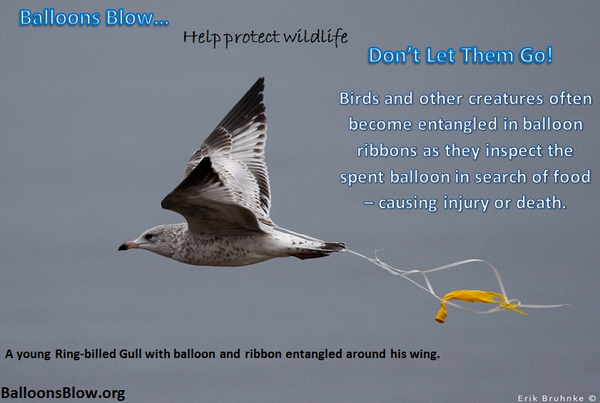
So let's talk about what those risks actually are. As I mentioned earlier, a latex balloon takes six months to biodegrade. That gives wildlife around 180 days to eat the fragments that drop to the ground. Plenty of time to do plenty of damage. Obviously plastic and latex contain absolutely no nutritional value for animals, so the energy they expend consuming the materials is wasted. Some animals don't even get as far as swallowing the remnants; instead, they get pieces tangled around their mouths and beaks, preventing them from eating anything at all and resulting in them starving to death, a truly horrific way to die. 

The ribbons are just as bad as the balloons themselves as these can get wrapped around feet, rendering the animal helpless, and often they struggle so much to get free that the ribbon eventually cuts into their skin, giving them nasty wounds that can lead to limbs becoming partially or wholly detached.  Balloons don't only have an effect on the terrestrial environment. Those fragments that don't land on the ground end up in the ocean where marine mammals, such as seals and turtles, and seabirds will eat them. It is estimated that 90% of seabirds have plastic in their stomachs. That kind of statistic is sickening and shows just how much of an impact we humans have on wildlife.


www.balloonsblow.org
I am grateful that, so far, I haven't come across any injured or dead animals during my beach clean ups. That being said, I have picked up countless pieces of balloon and ribbons from Worthing beach and I have wondered what damage the missing pieces have done elsewhere. These occurrences are 100% preventable if the people responsible for organising releases put an end to any future events. There are many other ways to mark special occasions or to show you are thinking of a loved one, without causing any damage to the natural world. 

Many councils across the UK have already banned balloon and paper lantern releases on their land. However, there are still many, many more that have yet to do so. Click this link to see if your council has already banned the release of balloons and lanterns and if they haven't, get in touch with them, via Twitter, Facebook or email, to ask them why and persuade them to reconsider. My council isn't on there, so I intend to get in touch and voice my opinion. I hope you will do the same. 

Wednesday, 4 November 2015

"Every Child Wild": The Wildlife Trusts' Campaign to Reconnect Children with Nature

When I was volunteering in the visitor centre of RSPB Pulborough Brooks recently, two young girls came bursting through the door with pink cheeks, big grins and a bug pot clutched tightly in their hands. They rushed up to me and held the pots up saying "Look what we found!" Their enthusiasm was infectious and had me grinning away with them. I peered inside each pot to see a red beetle and a small spider but, since my insect/arachnid fact pool is pretty sparse, I couldn't tell them specifically what they had caught. Despite this, the girls remained giddy with excitement, showing me what they had ticked off on their spotting sheets while they had been on the reserve. They both went home with stickers, still laughing and talking animatedly about what they had seen. I was left glowing in the knowledge that there were two more children who got close to nature, learnt something and took away a wonderful experience.
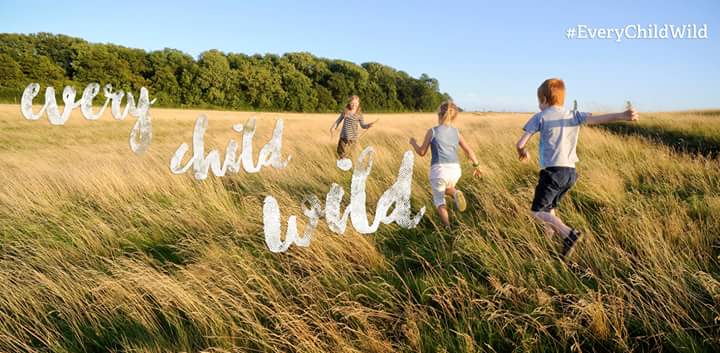
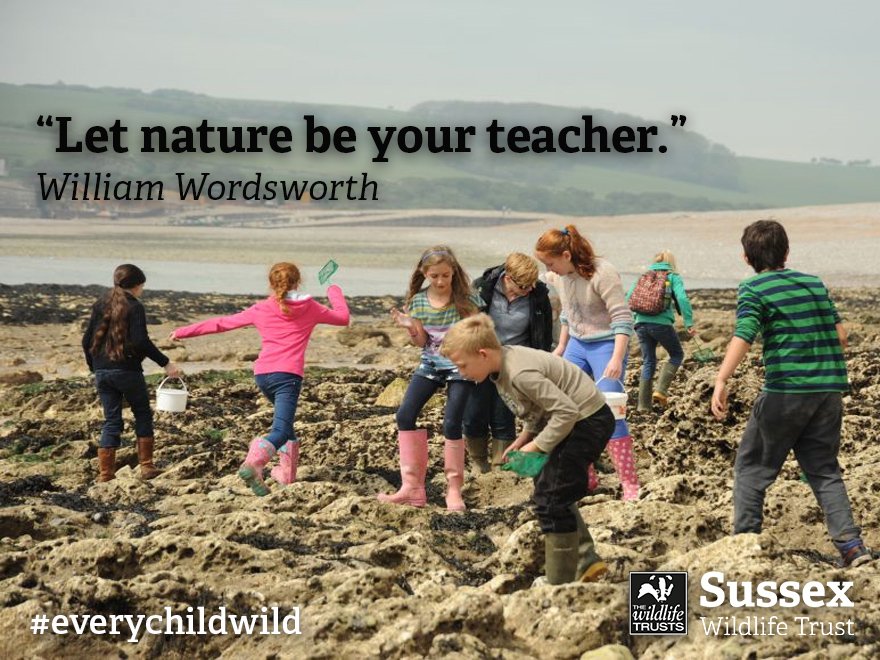
Connecting children with the natural world is one of the challenges of our modern, technologically-advanced world and it's one that is close to my heart. It's also very close to the heart of The Wildlife Trusts who today launched their new campaign "Every Child Wild". Their goal is all in the name: to get every single child in touch with nature in some way. On the campaign page of their website (visit this link: www.wildlifetrusts.org/EveryChildWild) they say:

"Children are happier, healthier and more creative when they are connected with natural world. This should be an option not just for a few, but for every child in the UK."

It seems like an obvious concept but, unfortunately, it would appear that there is a severe lack of "wild play" in the lives of children nowadays. As we all know, there is a lot of focus around smart devices and many kids spend most of their time staring at a screen of time kind, both at home and at school where tablets are being introduced more and more as a learning tool. Of course, there are plenty of benefits to using these devices for learning but too much screen time is preventing children from getting fresh air, exercise and from experiencing the wildlife on their doorsteps.

The Wildlife Trusts commissioned a report this year to find out exactly where children and nature stand together and they came back with some worrying statistics. They said that 27% of 8-15 year olds had "never played outside by themselves, beyond their house or garden" and of those children, 37% had not played outside in the past 6 months. When I think back to when I was that age, I have clear memories of spending the warmer evenings playing games on the local green with the neigbouring kids, having water balloon fights and constructing unfeasibly long daisy chains. In fact, the memories that have stuck in my head are the ones I spent outside. 

Naturally, parents face a number of worries over letting their children play outside, busy roads and stranger danger being two of the biggest. Green spaces are much less abundant now, with so much housing development going on, and for those children living in more urban areas, finding an outdoor place to play is even trickier. That's why a campaign like "Every Child Wild" is so vital. It's working hard to get round the challenges of modern Britain and find new and exciting ways for kids to involve themselves with wild activities. 
A big part of this campaign is targeted at schools. Children generally spend five out of seven days of the week at school, so a large percentage of interaction with nature has to be undertaken there. The Wildlife Trusts are already reaching 300,000 school children each year but there are 500,000 still to be reached. In the Trusts' report, they found "only 24% of children said their school had an indoor nature display area like a nature table" and just half of children said they have a nature area outdoors. More of an emphasis needs to be put on nature at schools, so that they can develop a proper respect for the environment and discover new and exciting facts about wildlife; this is where the conservationists of tomorrow will be inspired.

The importance of encouraging children to get outside cannot be stressed enough. There are so many benefits to connecting with nature, not only for young people but for all ages; both physical and mental health can be vastly improved, as well as knowledge. The "Every Child Wild" campaign is working to inspire children, parents and teachers together through nature clubs, reserve visits and plenty of fun ideas to have a wild adventure! The image of myself and my brother running through woods filled with bluebells, dragging around huge sticks and getting covered in mud when we were little is one that I'll always have. Children of this generation need similar images of their own so that they can look back when they're older, as we do, and remember what nature meant to them. 

You can follow the campaign on Twitter using the hash tag #EveryChildWild and share your own thoughts and ideas there too. 

Sunday, 25 October 2015

Disconnecting to Reconnect

I've been reveling in the glorious colours of autumn over the past week or so. It's really one of the best displays of turning leaves I've seen in a long while! Driving down the A24 is a real treat at the moment, with the bordering trees either side showing an array of golds, reds and russets that look stunning in the sunshine.

I spent the morning at Pulborough Brooks as a hides and trails volunteer again. This is the first time I've gone out on my own as I've had Graham, a much more experienced and knowledgeable volunteer, showing me the ropes these past few weeks. I was glad of the chance to see how I got on with identifying trickier species without a seasoned birder to help me. Of course, I had my Collins guide tucked in my backpack but I didn't need it today. So far I've been lucky with the weather on the days I've been on the reserve and today was particularly lovely; what I'd call a proper autumn day. There were a few raptors about, including a couple of sparrowhawks and male kestrels, and one female peregrine bathing in a small pool in front of Winpenny hide.

That is a peregrine-I promise! These terrible photos were snapped on my phone through the scope.

I had an especially close encounter with a pair of goldcrests which were busy picking insects of leaves only a couple of feet above me. I was close enough to see the reflection in their eyes and that fantastic streak of yellow on their heads. They weren't fazed at all by me stood so near which is pretty unusual for what is normally a very shy bird!

At Hanger View, I stood with a group of visitors and watched two healthy-looking male bullfinches flicking between the sloes. A buzzard circled over the pools for a while but was seen off by a rather brave and determined lapwing. From Nettley's hide, I managed to identify five black-tailed godwits which I was pleased with as I'd never seen them in the flesh before, although I knew they were about having checked the sightings book when I arrived. Myself and the visitors in the hide also picked out three snipe with some difficulty; boy, those birds blend in! It certainly helped to have the scope with me.
Fuzzy Snipe.
Wigeon
Black-tailed Godwits

When I got back to the visitor's centre, it occurred to me that, apart from taking a few photos, I had just spent four hours completely away from technology. I'll openly admit that I use my phone far too much normally and it's become one of those bad habits that I hate but find very hard to break. Part of the reason I use social media a lot is to do with my portrait business as I always have messages to reply to and I don't like to leave those too long. However, I know full well that I check Facebook/Instagram/Twitter/Insert preferred platform here too many times in a day and it's something I try hard to avoid. The fact that I didn't once feel the need to hop online while I was out and about on the reserve today proves that I am capable of cutting back. I actually felt really good about having been off grid for a short while and just spending time in the fresh air doing something I genuinely enjoyed, something that didn't involve a screen.