Tuesday, 21 July 2015

Letter to the BBC Re: Jeremy Vine's "Killer Seagull" Segment

Last Friday, I happened to be listening to the Jeremy Vine show on BBC Radio 2 while myself and my family were in the car travelling around South Wales. One of the articles was discussing the unfortunate story of a woman's dog that was pecked to death by seagulls in her back garden. I use the word "discussing" with some sarcasm as it very much was not a discussion; it was commpletely one-sided and definitely not impartial, as the BBC are supposed to be. There was not a single wildlife or ornithological expert representative on during the segment and I really felt quite angry that the gulls were more or less being attacked by people with nothing to go on but their bad experiences with them. I decided to write to the show this morning, as I only got back from Wales over the weekend, to express my frustration at the lack of facts and proper information provided. Here is what I wrote:

Dear Mr Vine and team,

I am writing in response to the segment on your 17th July show regarding the dog pecked to death by seagulls. I listened to the entirety of the segment while driving round South Wales where, I will point out, there are a number of gulls. I found myself extremely disappointed and frustrated by the end of the segment as I was waiting for the moment when you would speak to someone on the other side of the argument, someone who wasn't just a caller complaining they couldn't drink a cup of tea in their garden without harassment, but that moment never came. 

The reason I expected to hear from a professional who could give some insight into the gulls' behaviour and the reasons behind it is that your show, as you know, is part of the BBC. I was under the impression that the BBC are all about impartiality and therefore don't take sides in debates. If this is indeed the case, then I would like to know why you failed to provide the other side to this gull debate; where was the representative from any of the wildlife organisations in this country? There are any number of callers or speakers you could have had speaking on this issue which could have perhaps balanced out what seemed like a complete attack on the gulls themselves.

I am in no way condoning what happened to the dogs and tortoise discussed on the show; what a horrible experience for the owners and as a owner of pets myself, I know the heartbreak they must have felt. What absolutely needed to be emphasised further was the fact that these birds do not go around pecking dogs for fun. It was mentioned but very briefly that the gulls were extremely likely to have been nesting nearby to the gardens in question and therefore will have been naturally and instinctively protective of their nesting area. If they think their eggs or chicks may be under threat, they will act to defend them, the same as any wild animal would, because we must remember we are sharing this planet with wild animals, or even as any of us humans would. 

When it comes to the aggression of gulls on the seafronts and beaches, well, we can only blame ourselves for that behaviour. Ever since visits to the seaside became popular, as far back as the Victorian era, we have fed gulls with scraps from our picnics. These are scavenging birds, I would like to point out, not fishing birds. They are found in various habitats across the country, not only the coast; they will simply go wherever there is food to be scavenged, just like corvids (crows, rooks etc.) So we have spent countless decades tossing chips and sandwich crusts to these birds, encouraging them to hang around the coastal areas and to gather when they see a group of humans with greasy paper bundles on their laps. They are only acting on the instincts developed due to our misguided encouragement. I would like to say that, during my recent trip to Wales, I spent a lot of time on various beaches and saw flocks of many different species of gulls but not once was I or a member of my family swooped on, even when we had food with us. None of which we fed to the gulls, obviously. 

I was sorry to hear some of your callers referring to gulls as 'pests' and 'vermin'. It's the same way feral pigeons often get spoken about. These birds are thriving in urban environments because they are intelligent and have worked out their best chances for survival are in these towns and cities where the scraps of food are abundant and tourists will happily share their lunches. No, it isn't pleasant to be dive-bombed while you're trying to enjoy an ice cream and it certainly must have been terrible for the pet owners to lose their animals in such a way, but none of this behaviour is for fun. They are acting on instinct. They are wild animals and we have to find a way to live in harmony with them. 

I am by no means an expert on these matters, however I do feel it is important to make sure the public have a clear understanding of the natural world they are surrounded by. Perhaps if you had bothered to have an expert on during the segment last Friday, much of this information and more could have been imparted and your listeners may well have gained new insight into the behaviour of the gulls. I feel the article was nothing but an attack on the gulls and it was the language used by Mr Vine himself that bothered me, when he referred to the birds as "killer gulls". That certainly doesn't sound like impartial language to me. This isn't a plague of gulls going round pecking people for fun and it is certainly nothing like Hitchcock, as one caller suggested. 

I really feel strongly that if you had invited an expert caller on to the show, the debate could have become exactly that which, by definition, should be two-sided. Instead, it sadly came across as a complete bombardment of "gull haters" with absolutely no factual basis. I would hope, should you feature such segments on your show in the future, that you might give a little more thought to the impression you are putting across. Wildlife is extremely important. Every species serves a purpose but without education in cases such as these, the public will never learn to understand and respect that.

Kind regards,

Emily Summers

I'm not expecting to hear back from them really, as it aired several days ago now, but I really felt the need to express my opinion. So many people don't understand wildlife and situations such as these really don't help. 

Sunday, 5 July 2015

30 Days Wild Days 27-30: The Last Few Days

Well folks, we have officially entered July which means 30 Days Wild is at an end. I haven't had much time to dedicate to wild acts in the last few days of the challenge but I managed to sneak moments here and there. Here's a summary of what I got up to:


On Saturday, I allowed myself a lazy morning in bed. I took my cup of tea and breakfast upstairs, opened my window wide and listened to the screechy chirps of the goldfinches in the oak tree directly outside my bedroom. The sunlight was glinting and caught the yellow bars on their wings as they picked at the leaves in search of insects.


The whole of Sunday was spent working on portraits so I took a few minutes in the evening, just as the sun had dipped, to stand in the bridleway next to our house and listen to the birdsong. The songs of blackbirds, song thrushes and robins floated on the air, layered on top of each other and a few rabbits hopped along the bridleway, unaware of me stood very still at the end.


Monday heralded the start of our "heatwave" and at eight in the morning, the temperature was already high. With another long day of work planned, I took the opportunity to sit out in the garden while I had my breakfast, wriggling my toes in the grass and listening to the dunnock calling from the hedge, one long, high-pitched squeak.


Enter the 30th of June, the final day of 30 Days Wild and I was to be found volunteering at Pulborough Brooks. Boy, was it a hot one! One of the members of the volunteer work party asked me if I wished I was working out on the reserve on a day like yesterday and I in all honesty was quite glad to be inside. Partly because I burn so easily, so extended time in strong sun is never a brilliant idea for me. During my lunch break, I sat outside by the pond next to the visitor centre and listened to the sparrows, blue tits and the clucking of a moorhen. A male blackbird landed in front of me with his beak stuffed full of small morsels. I think there were some fledglings sparrows still in the nest boxes, poking their heads out and squawking to their parents.


Although I had quite a lot of work and volunteering keeping me occupied during June, I still just about managed to have my moments with nature each day and even learned a few new things. The campaign was a very effective way of encouraging us to engage with the natural world more often and I intend to keep it up wherever possible, by visiting new places and continuing to educate myself, particularly on bird songs and calls which remains my weakest area. 

Stay wild everybody!

Friday, 26 June 2015

30 Days Wild Day 24-26: Close Encounters of the Deer Kind

I'm a little behind on my blogging but only because I have yet to figure out a way of slowing down/pausing time so that I can fit everything in! I also can't quite believe we have nearly reached the end of June and therefore the end of 30 Days Wild; just four more random acts of wildness left.

On Wednesday, day 24, I was working on commission work again, as I quite often am. As much as I have tried to in the past, I am unable to work outside as I draw my portraits from a tablet and it's just too bright even in the shade for me to see the details I need on the screen. So I more or less spent the day indoors. 

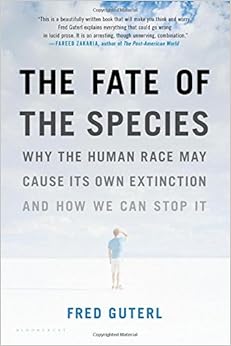
Before bed, I caught up on some of the book I've been reading recently called "The Fate of The Species" by Fred Guterl. It's a very thought-provoking read about the state of the planet and the various ways we could be pushing ourselves to extinction. Hypothetical scenarios based on scientific research. I'm certainly finding it interesting but also quite depressing when I consider just what sort of state we are leaving Earth in for future generations. We may not see a mass extinction of our species in this lifetime, or the next, but it's definitely on the cards; it's just a case of what will be the tipping point. 

Day 25 was full of surprise encounters involving no planning of mine whatsoever. We had to take a trip into Horsham town centre in search of various items and the car park was busy so we ended up parking on the top storey, open to the elements. Within moments of leaving the car, I noticed a flock of house martins swooping just above us, presumably catching insects. I know they nest in East Street so they weren't too far from home and it was, as always, a lovely treat to see them. 

Back at home, after having only seen a handful of butterflies so far this year, a flutter of colour caught my eye through the kitchen window. I ventured out for further investigation to see a meadow brown resting on one of our bushes. The really exciting moment came later in the evening though. By pure chance, I happened to be stood in our front garden, watching a flock of thrushes rattling between the trees through my bins. I focused further out, across the big lawn of the main house, and spotted a roe deer. I watched her for some time as she moved nearer and nearer our garden and after a few moments, I noticed a much smaller deer just behind her: a very young fawn. He seemed full of energy, bounding around after his mother and it made me wonder whether it was his first trip out.


 I stayed as still and quiet as I could while simultaneously trying to get a few photos-no easy task! The pair moved even closer to me and I realised they were going to cross right in front of me, mere feet away. I could feel my heart beating harder and I think I might have gasped as the beautiful doe and her fawn clip-clopped slowly and casually across the driveway; the only thing separating them from me was a waist-high hedge. I could see the adult's eyelashes. Now, this might sound utterly ridiculous to some of you, but I'm hoping the rest of you will be able to appreciate how I felt. Any close encounter with a wild animal is special, no matter how boring some might consider them.


I was actually quite pleased that, for once, they didn't catch my scent or see me, and bolt. It was a moment to be savoured.

I spent today in Eastbourne with my mum. We went to see the semi-finals of the Aegon International tennis which was the first time we've seen live tennis and was such a fantastic experience. It didn't stop me noticing the wildlife though. When we stopped to get cash out in Southwater, a flock of swifts were swooping across the square, screaming and twisting around after insects, much like the house martins on Wednesday. Later in the day, during the matches, I saw several house martins doing the same above the court. I'm also fairly certain I saw a peregrine fly past with prey in its talons but it was too tricky to keep one eye on that and the other on the match!

After getting cash, we were travelling on the A272 and a gliding figure caught my eye. The sun caught some pale feathers under the expansive wings and my first thought was buzzard, but the second I saw a forked tail, I knew I was looking at a red kite. It was relatively low too, so I got a good view of it and for a change, I wasn't driving when I saw one!

I do so love the more unexpected sightings of wildlife. It's like nature's way of reminding us that it's still there, no matter where you are or what you're doing.

Wednesday, 24 June 2015

30 Days Wild Day 23: Lunch With a Kestrel

Pulborough was busy on Tuesday. My four hours of volunteering flew by in a flash and I had plenty keeping me occupied. I did manage to grab a 20 minute break when I went for a quick walk on the heathlands again. It was an extremely close day which is why I think I had a headache for most of the day, despite drinking plenty of water. The fresh air did help to an extent but I soon forgot about my head as I watched a beautiful kestrel glide above me, low enough for me to see the sandy feathers underneath. It landed on the outside of a tree at the bottom of the valley where I followed it to try and snap a couple of photos. It's times like that when I wish I had one of these amazing telephoto lenses!

Not great, but you get the idea!

30 Days Wild Day 22: Chichester Fledge Watch

The big moment is finally here! Well in actual fact, it's already passed as I type this but when I was with the peregrines on Monday, the juveniles hadn't officially fledged yet. We were on "Fledge Watch" all day and those birds certainly kept us on the edge all day. All three of the juvys spent the majority of the day perched on the turret crenelations, flapping their wings repeatedly and a few times looked like they might just make the leap. I got a crick in my neck from looking up all day. 

The adults stayed tucked inside alcoves on the spire during the morning as we had some torrential rain and peregrines really don't enjoy flying in the wet. As much as I would have liked the young to fledge while I was there, I knew the weather would have a big effect on whether they went or not and I wasn't holding out much hope. Still, it was lovely to see them on such great display all day and it meant we had something to show the visitors most of the time. Of course, the most frustrating part for me was knowing that once I went home, I wouldn't be able to carry on following their progress on the webcam. At least during "Hatch Watch", there was always something to be monitored on the camera but with the chicks outside of the frame, I would have to miss the moment they branched out.

I was pleased to be able to get decent views of them before they left though. They are brown and cream versions of their parents with beaks that look almost blue but they certainly have the peregrine call down to a fine art! 

The first two juveniles fledged yesterday and the third went today. I'm hoping someone might have been around to capture some photographic evidence as I feel like I've missed out on one of their biggest moments! Sadly, I don't think the cathedral staff would take too kindly to me camping out on their lawn. I have two shifts at the project next week which is actually the final week of monitoring. I don't want it to end!

Monday, 22 June 2015

30 Days Wild Day 21: Father's Day Nature Walk

I visited my Dad in Burgess Hill for Father's Day. We went to see a certain dino-related film at the cinema (very good, would definitely recommend if the nail marks in my palms are anything to go by!) and afterwards we had a table booked at the local Beefeater which was only two miles away. We decided to walk there rather than drive since it was a warm evening and there was a lovely footpath to follow.

There wasn't a huge amount of wildlife to be seen on the way there, apart from the odd woodpigeon but on the journey home, when the sun had started to dip lower, there were several rabbits out and about, being kept company by six (for gold) magpies. We stopped to look at the view across to the South Downs and I pointed out the song of the song thrush and chiffchaff which my Dad and step-Mum hadn't heard before. The thrush actually perched in direct view for us and sang his heart out for some time before flying off. There must have been at least three thrushes that I could hear in the immediate area.


I was pleased to see such a range of grasses growing in the verges running along the trail. I don't know anything about species of grass but there was definitely a variety there, as well as oxeye daisies, dog roses and thistles. It made a nice change to walk somewhere rather than drive. You see so much more when you make the effort to take your time and take in your surroundings.

Sunday, 21 June 2015

30 Days Wild Day 20: Creatures that Flap in the Night

I stood in our back garden around 9:45pm yesterday with the intention of doing some bat-watching. We have at least three or four bats flapping around our house most warm nights so it doesn't usually take much patience to spot them. However, on this particular night, the bats were not playing ball. I saw one individual which didn't hang around and after that, zilch. I thought this was strange considering the evening was mild and there were more than a few moths and insects buzzing around above me. Rich pickings for the bats, you would think!

It wasn't a total bust though. I had a quick look around the exterior light for any moths and found a rather large, bright orange one thrashing around in a spider's web. It managed to get itself free and settled above the light, staying still long enough for me to get a decent photo. Moths are not my strong point by any means and I did get rather excited by this new visitor as most of the species I see in our garden are variants of grey/brown. After a quick Google search, I was ever so slightly disappointed to discover that my orange moth is called an Orange Moth. Someone clearly ran out of ideas on that day at the office!

Orange Moth

There are a few nooks and crannies in the exterior walls of our cottage which I inspected with a torch and found two False Widow spiders occupied with the remains of their prey. They are easily identified by the light brown legs and contrasting dark abdomen with white-ish markings. I've never noticed them in the garden before and I didn't realise quite how small they are. We do also have a resident Cupboard Spider living in the eaves of our porch. It has been there for a long time and only ventures out of its funnel-like web at night. It is extremely shiny and black with a very bulbous abdomen.

False Widow

I stuck around outside until it was more or less completely dark but still didn't see any more bats. This was a shame as they are so wonderful to watch; they have such a distinct flying pattern and often I have felt them fly so close to me that I could hear the clicking of their sonar. Maybe I'll have more success another night.